

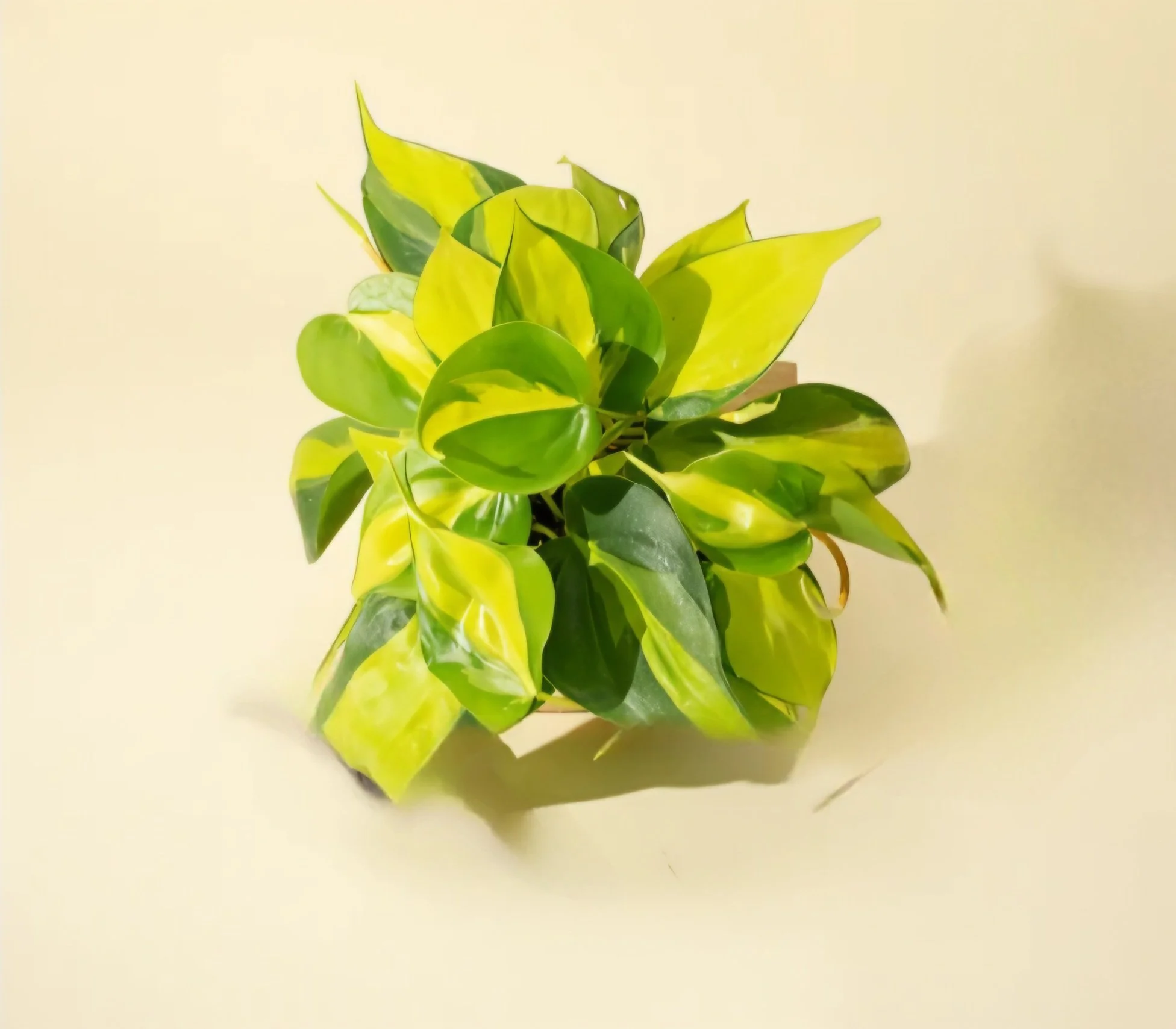
The Philodendron Brasil (Philodendron hederaceum 'Brasil') is a vibrant, easy-care houseplant famous for its glossy, heart-shaped leaves with bold lime-green stripes. Named for its resemblance to the Brazilian flag, this vining plant is a variegated sport of the classic Heartleaf Philodendron.
Characteristic
Variegation: Each leaf features a unique splash of chartreuse or gold down the center. New leaves may even emerge with pinkish or bronze tones.
Growth Habit: It is a fast-growing trailer that looks stunning in hanging baskets or climbing up a moss pole.
Toxicity: Like most philodendrons, it is toxic to pets and humans if ingested, as it contains calcium oxalate crystals.
Essential Care Guide
Light: Thrives in bright, indirect light. While it can tolerate low light, it may lose its variegation and revert to solid green if kept too dark.
Watering: Water when the top 1–2 inches of soil are dry. It is more forgiving of underwatering than overwatering, which can lead to root rot.
Humidity: Prefers moderate to high humidity but adapts well to standard indoor environments.
The Philodendron Brasil (Philodendron hederaceum 'Brasil') is a vibrant, easy-care houseplant famous for its glossy, heart-shaped leaves with bold lime-green stripes. Named for its resemblance to the Brazilian flag, this vining plant is a variegated sport of the classic Heartleaf Philodendron.
Characteristic
Variegation: Each leaf features a unique splash of chartreuse or gold down the center. New leaves may even emerge with pinkish or bronze tones.
Growth Habit: It is a fast-growing trailer that looks stunning in hanging baskets or climbing up a moss pole.
Toxicity: Like most philodendrons, it is toxic to pets and humans if ingested, as it contains calcium oxalate crystals.
Essential Care Guide
Light: Thrives in bright, indirect light. While it can tolerate low light, it may lose its variegation and revert to solid green if kept too dark.
Watering: Water when the top 1–2 inches of soil are dry. It is more forgiving of underwatering than overwatering, which can lead to root rot.
Humidity: Prefers moderate to high humidity but adapts well to standard indoor environments.